Piperacillin for Targeted Lyme Disease Treatment
SHORT DESCRIPTION
For infectious disease clinicians, this piperacillin-based therapeutic approach targets Lyme disease by inhibiting bacterial cell wall synthesis to reduce disease progression.
INVENTORS
INVENTORS
- Brandon Jutras*
- Northwestern University Feinberg School of Medicine, Department of Microbiology-Immunology
* Principal Investigator |
NU Tech ID: NU 2025-156
IP STATUS
U.S. Provisional Patent Application has been filed.
DEVELOPMENT STAGE
TRL-3 - Experimental Proof-of-Concept: Demonstrated efficacy in preclinical mice models.
|
BACKGROUND
Lyme disease is a tick‑borne infection caused by Borrelia burgdorferi that is endemic across North America, Europe, and parts of Asia, with hundreds of thousands of estimated cases annually and rising incidence in many regions. Most patients diagnosed early respond well to 10–14 days of oral antibiotics such as doxycycline, amoxicillin, or cefuroxime, and more severe neurologic or cardiac involvement is treated with longer or intravenous regimens. However, diagnosis can be difficult because early symptoms (fever, fatigue, arthralgia) are nonspecific and the erythema migrans rash characteristic of Lyme disease is not always recognized, leading to delayed treatment and a higher risk of complications such as Lyme arthritis, neuroborreliosis, and carditis. Even after guideline‑concordant therapy, an estimated 10–20% or more of patients report persistent fatigue, pain, or cognitive symptoms—often termed post‑treatment Lyme disease syndrome—yet there are no proven antimicrobial or disease‑modifying treatments for these chronic manifestations, and management is largely supportive, highlighting the need for a more targeted and effective intervention.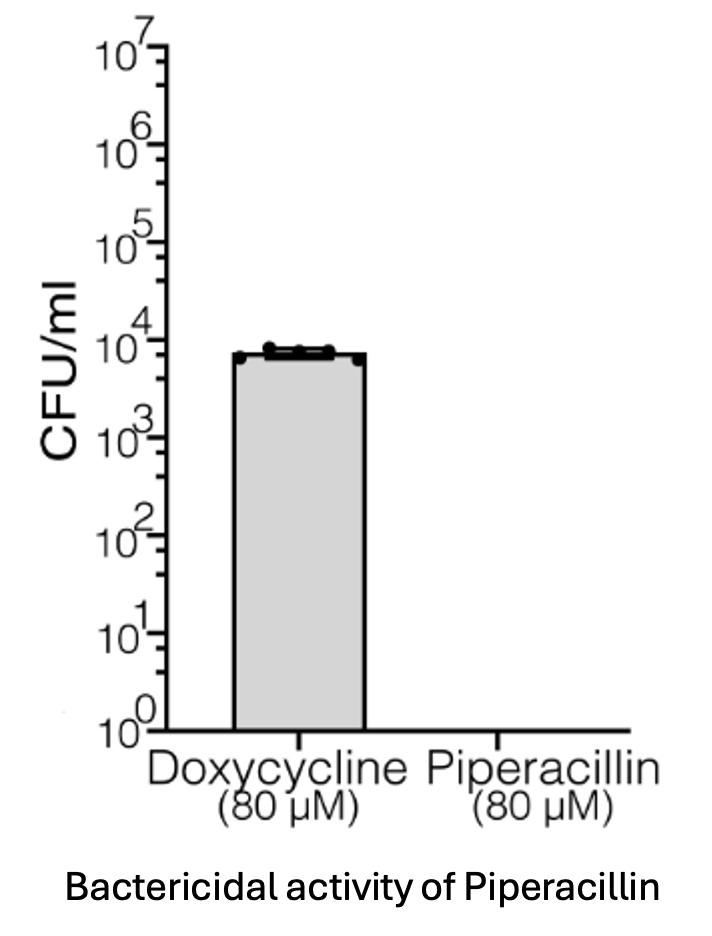
ABSTRACT
We present a therapeutic approach using piperacillin to treat Lyme disease. The invention leverages the beta-lactam’s ability to inhibit bacterial cell wall synthesis. In preclinical mouse models, the treatment effectively reduced bacterial load at a 100-fold lower dose than the effective dose of the standard treatment doxycycline. These results suggest a promising pathway toward improved Lyme disease management in clinical settings.
APPLICATIONS
- Lyme Disease Treatment: Targeted therapy for patients infected with Borrelia burgdorferi.
- Prophylactic Approach: Preventative therapy after a high-risk exposure to Lyme disease.
- Combination Antibiotic Regimen: Potential use alongside other drugs to enhance treatment outcomes.
ADVANTAGES
- Increases treatment specificity: Focuses the therapeutic effect to reduce off-target exposure.
- Potential to overcome resistance: Utilizes a well-known beta-lactam to target sensitive bacterial strains.
- Accelerates symptom relief: Preclinical data indicate a rapid reduction in bacterial load.
- Cost-effective development: Leverages an established antibiotic with a proven safety profile.
PUBLICATIONS
 KEYWORDS
piperacillin, Lyme disease, beta-lactam, antibiotic therapy, targeted treatment, preclinical, mouse model, infectious diseases
Patent Information:
| Title |
App Type |
Country |
Serial No. |
Patent No. |
File Date |
Issued Date |
Expire Date |
Categories:
Life Sciences > Therapeutics
Keywords:
Infectious disease
Targeted therapy
Therapeutics